Saturday, January 19, 2008

Malaria Problems in Africa - How you can help


A million deaths a year, almost 90% of them children under the age of five, the culprit MALARIA!

Because of the debilitating nature of Malaria, families stricken with this disease are unable to tend and harvest up to 60% of their crops. This means less to eat and even less to barter with.

And thus the cycle of poverty and disease begins.
This planet is a malarious planet, though it may not seem that way when looked at from the vantage point of a wealthy country, where if we even consider malaria, it is thought of as a problem that has mostly been solved. In actuality, malaria now affects more people than ever before.. In recent years, the parasite has grown so entrenched and has developed resistance to so many drugs that the most potent strains can scarcely be controlled. This year malaria will strike up to half a billion people. At least one million will die, most of them under the age of five, the vast majority living in Africa. That's more than twice the annual toll a generation ago.
Malaria, a plague of the poor is easy to overlook, though in the past few years, malaria captured the full attention of aid agencies and donors. The world health Organization has made malaria reduction a chief priority. The idea is to disable the disease by combining vitually every known malaria-fighting technique, from the ancinct (Chinese herbal medications), to the old (bed nets) to the ultra modern (multidrug cocktails). At the same time, malaria researchers are persueing a long-sought, elusive goal; a vaccine that would curb the disease for good.
Most of the aid is going to a few hard hit countries scattered across sub-Saharan Africa. If these nations can beat back disease, they'll serve as templates for the global anti-malaria effort. And if they can't? Well, nobody in the malaria world likes to answer that question.
Where can you help?
We at African Sky have partnered with another organization to get malaria medications to rural areas of southern Mali where we already have a support structure in place. The medications are guaranteed to get to the people that need them most, the way that medications are meant to, free of charge. African Sky will make your entire donation work in the fight against malaria. A $20 dosage purchase, buys the medication, has it shipped to Mali, and provides a small percentage for training the local clinics to administer the drug and care for the patient. Just think, your $20 could save the life of another innocent child that doesn't have a choice.
What will we be supplying?
The drug of choice, is the newest malaria cure available, which also happens to be based on one of the oldest - an herbal medicine derived from a weed related to sage-brush, sweet wormwood, called artemisia. This treatment was first described in a Chinese medical text written in the fourth century A.D. but seems to have been overlooked by the rest of the world until now. The new version, Artemisinin, is as powerful as quinine with few side effects. It is the last remaining surefire malaria cure. Other drugs can still play a role in treatment, but the parasites have developed resistance to all of them, including quinine itself. To help reduce the odds that mutation will also disarm artemisinin, derivatives of the drug are mixed with other compounds in an antimalarial barrage known as artemisinin-based combination therapy, or ACT.

Log on now, buy a complete treatment to save a life..........

Saturday, December 01, 2007

African art of the Maasai


Maasai African Art form Kenya and Tanzania.
As the Maasai traditionally eat neither fruit nor grain, milk, either fresh or curdled, is the basic food staple, and is often drunk mixed with blood (the mixture is called nailang'a) in the dry season, when milk yields are low.
It is generally stored and carried in long, decorated gourds which are washed with urine (despite our western preconceptions, urine is totally sterile when fresh, and thus acts as a mild antiseptic). Milk itself - the gift of Ngai's cattle - is symbolized on ceremonial occasions by the application of a mixture of white chalk and water to the bodies of participants.
Once a month, blood is also taken from living animals, usually to be mixed with milk. This is done as follows: a noose is tightened around a cow's neck, causing the jugular vein to swell. A short blunt arrow with a 1cm tip and its shaft bound with twine, is then fired at close range from a loosely-strung bow to puncture the vein. The blood which spurts out is caught in a gourd. The wound is not fatal and is stopped afterwards with a wad of mud and dung to stop the bleeding: all in all, not that different from people giving blood. The Maasai believe the blood makes them very strong. Curdled blood is called osaroi.
The Maasai believe that Ngai (God) entrusted all the world's cattle to them for safe-keeping when the earth and sky split at the beginning of time, and this is how they justify raiding cattle from other tribes. The story goes that Ngai (a name synonymous with sky) was once one with the earth. Then earth and sky separated, and Ngai delivered cattle to the Maasai by means of the aerial roots of the wild fig tree, which is sacred.
For the Maasai, cattle are everything: food, material, culture, ritual. Cattle are life. "I hope your cattle are well", they say in greeting.
More than any other Kenyan people, the pastoralist Maasai are a cattle-herders par excellence. Cattle provide almost everything they need for survival, and much more besides. They are a symbol of wealth and a source of pride, and a person's entire life revolves around the herds: the need to pasture and care for them, the need to protect them, and the need to move with them in search of fresh pasture and water.

A-Bemp headdress in African art.

The A-Bemp Headdress in African Art

At adolescence, young boys of the Baga enter a new stage. They form wrestling groups, and much of their ritual has to do with combat.

They also continue to conduct their own ritual, some of which involves masquerade. A headdress shaped as the figure of a large bird has long been one of the most popular masquerades of young men and boys. It is called 'the bird' -'a-Bemp' or 'a-Bamp'. The basic headdress is simply a bird form with a long neck, a long beak, a pot-bellied body, and broad striped wings over the back. A stake extends down from its belly, used to insert into an armature that the dancer wears on his head.

The headdress can range in form from softly naturalistic to extravagantly abstract and composite. Many of these figures bear twin miniature birds on their backs, often in conjunction with a miniature house. A checkerboard pattern often appears on the bird's front.

There are infinite departures from this basic form. Attachments may depict the Baga woman, model canoes, and airplanes. Some examples are almost completely abstract and extremely complex, incorporating bird and serpent forms as well as indeterminate geometric shapes.

One detail stands out, as a curiosity, in all this; the model house. A house is also seen on another headdress, the Banda. The house is the symbol par excellence of the gratification of sexual desire. Traditionally, it was only at marriage, preceded by the requisite initiation, that the young man built his own house. It was to this house that his brothers carried his bride on their shoulders following her marriage, and it was this little house that his marriage was consummated.

The a-Bamp headdress does not consistently represent any particular bird in nature. Many examples have head crests, suggesting the elegant large stalking birds of the sea inlets with their crowning tufts of feathers. The dance of the a-Bamp is athletic. The dance skips around the perimeter of the circle formed by the audience. He crouches and then leaps up; or, crouching, he tilts to the right and left. Occasionally he may twirl, accelerating his steps, and end by lifting the headdress above his head and spinning it around. Accompanying the dancer are men beating the large slit gong, box drums and smaller drums suspended under their arms. The dance generally takes place at night, so a young man may follow a-Bamp with a torch made from a lit bundle of grass.

for more wonderful African art items log onto http://www.forafricanart.com/ your African art superstore

Wednesday, April 12, 2006

New Affiliate Program


Webmasters, make money by reffering customers to our site, earn a commission for every buying referral today! Full affiliate software allows you to manage your banners and links, reports show all referrals and commisions due. Click on the link to join now. African Art Affiliate Program.

Wednesday, February 22, 2006

African Religious Art

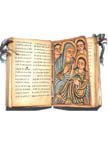
Ethiopian Gospel BookFor those of you interested in the religious side of the African people, I have put together a little information page on the Ethiopian manuscripts that were written on vellum, pictured is a Ethiopian bible, or gospel book, now in a private collection. If you go to my Sold Items page, you will see a Ethiopian magic scroll that is also now in a private collection.

New African Art archers bracelets.

Tutsi African art wrist guard
I have 3 Archers bracelets from The Tutsi arriving in a shipment shipment within the next 7 days. These bracelets were used by Archers to protects their wrists from the snap of the bow on release of the arrow. The wooden bracelets like those in the shipment were more prestigious, adorned with copper, than those commonly used by the average archer who would weave them out of grass, and were probably used by archers of the chief. These items will be viewable under the Weapons page of the For African Art website.

African Art and the Makonde.

I have posted two new pages on my website wiht information on the Makonde and their sculpture. The first is more of a general information page on the Makonde and the other has far more focus on the Makonde Sculpture.

New African Art items due in over the next 2 weeks

Here is a lsit of items due in over the next two weeks, I will try to post some pictures of the items that I got before they were boxed and shipped so that you can get an idea. If you are interested in any of these items, please feel free to contact me with queries, of to get the first right of refusal.
*Baule Door
*Afo Currency.
*Kusu Boloko Currency
*Idoma Currency
*Mfunte Currency
*Bambara Mask
*Senufo Kpeli-yehe Mask
*Double Baule Mblo Mask
*Zulu Beer pot cover
*Zulu Isicolo (Hat)
*Fang Ngil Mask
These items will be listed on New African Art Items page as soon as I get them photographed and loaded.<

Appologies for lack in Communication.

HI All,
Sorry about the lack in communication, things have been crazy over the last few months, it is full blown season down here in Florida, the gallery is crazy as ever, I am working with a museum for an permanent African exhibition in their new Spain location that is in the process of being built.
as far as product goes, I have got a lot of new items in over the festive season, the bulk of them have been loaded already, and a lot have bee sold already. For those of you interested in seeing the new items, feel free to take your time browsing my New African Art Items Page.
If you would like to see a sampling of some of the items that have sold over the last few months, take a lood at my Sold Items Page.

Monday, November 21, 2005

Kuba Raffia Textiles

The Kuba live in the Kasai river region of the Democratic republic of Congo (formerly Zaire.) The embroidered and decorated raffia cloths that are produced by the Kuba are the best known survivors of this wonderful ancient African tradition that was at a time a widespread process across the all of central Africa. Kuba cloth is woven from the fib of the Rafia Vinifera Palm. The production of these textiles is a multiple stage process involving the participation of children, men and women of the same clan. The process includes the collection and preparation of the raffia fibers for weaving and embroidery, weaving the basic cloth unit, dyeing the embroidery fibers, and embellishing the woven cloth with embroidery, applique, patchwork and dye.
For more on the Kuba Raffia Textiles visit Kuba Raffia Textile